What should we build?
Duty, fuel, site conditions, unit size, fleet composition and time-to-power are tested before a platform is selected.
Equipment selection, new-versus-pre-owned strategy, lifecycle economics, reliability engineering and owner-side technical due diligence for distributed and behind-the-meter power projects.
Decide what to build, what to buy and what to reject before capital is committed.
K4 supports developers who understand power projects but need deeper gas-engine expertise before locking the technology, equipment fleet and operating model.
Duty, fuel, site conditions, unit size, fleet composition and time-to-power are tested before a platform is selected.
New, used, rebuilt and relocated options are compared on evidence, remaining lifecycle and whole-life exposure.
Scheduled maintenance, overhaul rotation, forced outages, redundancy and common-mode risks are treated realistically.
Start with the owner decision, test the evidence behind the equipment, then build a realistic operating and maintenance model.
Technology and platform selection, fleet sizing, new versus used options, fuel fit, lifecycle economics and time-to-power trade-offs.
CAPABILITY / 02Verify identity, configuration, condition, operating history, remaining lifecycle and transaction risk before purchase.
CAPABILITY / 03Maintenance strategy, overhaul exposure, redundancy, critical spares and dependable fleet capacity over the operating life.
K4 can act as the independent advisor on the owner or developer side — from early technology choices through fleet verification and operating readiness.
K4 helps owners and developers test on-site gas-power architecture, unit size, fleet redundancy, fuel requirements and new-versus-used equipment as one owner-side decision.
K4 tests whether the exact machine — and the fleet around it — can support the intended output and duty over its remaining lifecycle.
Before price becomes the decision, understand the engine's actual condition, maintenance history, overhaul exposure, fuel fit and lifecycle cost. K4 provides an evidence-based written conclusion for buyers, investors and lenders.
Remote review of the available offer and documents, focused on material gaps, red flags and the next evidence worth requesting.
Deeper technical due diligence covering condition evidence, maintenance and overhaul exposure, configuration, fuel, scope and lifecycle implications.
Inspection scope is defined around the asset, location and decision. Travel, tests and specialist inputs are agreed before engagement.
The advisory framework is grounded in published cases, operating records and transparent lifecycle analysis. Each source states what is verified, reported or inferred.
Why model-family language cannot replace nameplate and serial verification.
Read the case → LIFECYCLEScheduled events, major-overhaul exposure and a transparent reserve model.
Review the analysis → OPERATING INTELLIGENCEOperating logs separated into utilization, downtime and technical causes.
See the evidence → DATA CENTER POWERLoad, redundancy, fuel, cooling and grid-interface questions before selection.
Read the framework →The client contracts the selected local contractor directly. K4-Technology remains independent on the client side — defining the result, testing the bid and verifying delivery.
Requirements, interfaces, economics, risk allocation and acceptance criteria are fixed before the tender.
Contractors are sourced and assessed; offers are normalized so price, exclusions and technical risk are comparable.
Design reviews, factory and site tests, milestones, commissioning evidence and handover are checked against the brief.
A concise decision memo with key assumptions, indicative CAPEX/OPEX, red flags and the next information required.
A transparent technical and economic model with scenarios, lifecycle costs, equipment concept and implementation strategy.
Targeted owner's engineering through tendering, design review, testing, commissioning and acceptance.
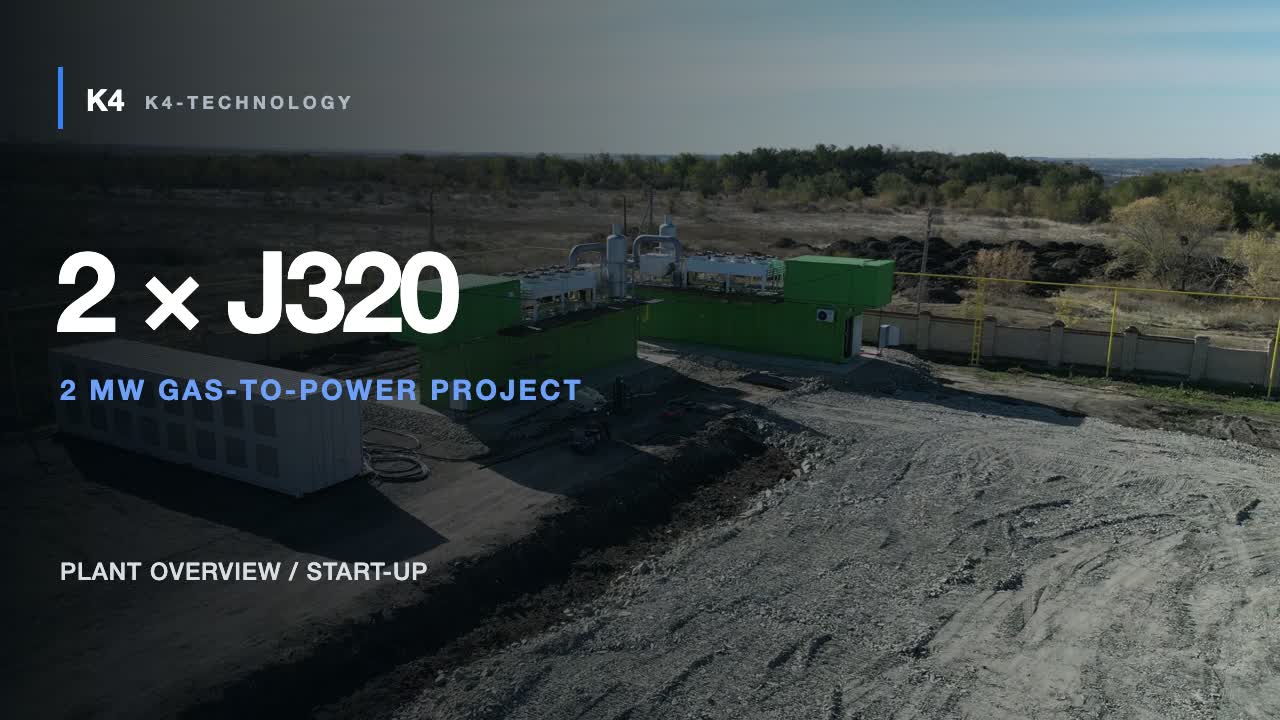
Short, factual footage from gas-to-power projects involving K4-Technology and founder Igor Shibanov — equipment logistics, installation, commissioning and operation.
Technical due diligence, operating economics and practical research based on public data, engineering calculations and explicit assumptions.
Identity, operating hours, service history, borescope evidence, FAT, fuel fit and transaction risk.
A technical review of gas availability, nameplate versus net output, VIIRS uncertainty and the questions still required before FID.
CAPEX ranges, boundaries and the assumptions behind them.
Interfaces, balance of plant and owner-side costs.
Scheduled maintenance events, the 40,000-hour cash cliff and a transparent reserve model from €8.19 to €11.94/MWh.
Documents, inspection points and commercial red flags.
Six independent checks for the real operating history behind an hour-meter reading.
Price, risk, availability and warranty trade-offs.
Why fuel treatment belongs upstream of the equipment decision.
Control, interfaces and risk allocation by delivery model.
A normalized comparison beyond headline price and efficiency.
The infrastructure and service thresholds behind the transition.
KIV-Technology d.o.o. in Belgrade is the international contracting entity of the K4 engineering group. The group's operating track record — 16 gas engine power plants totaling approximately 25 MW — is the practical foundation for our international advisory work.
We are independent of engine manufacturers and execution contractors. Our recommendations are informed by installation, commissioning, maintenance, overhaul work and live service contracts, but our international role starts on the client's side: analysis, due diligence and technical control.
Which gas-engine platform fits the duty, whether new or pre-owned equipment is rational, how lifecycle economics compare, what reliability architecture is required and which supplier claims need verification before capital is committed.
Our default model is client-side advisory. The client contracts a qualified local execution contractor directly; we define requirements, evaluate bids and verify delivery. Any broader scope is agreed separately.
Useful starting inputs are a gas analysis, site and load data, utility constraints, supplier quotations and any available equipment or project documents.
A written engineering report with photo and video evidence, condition findings, residual-life assessment, restoration budget and a fair-market-value opinion.
Send a gas analysis, site and load profile, supplier quotation or asset documents. We will identify the decision to make, the missing evidence and the smallest useful scope.